

GLP-1 therapy is bigger than weight loss.
GLP-1 receptors are expressed throughout the body: brain, heart, liver, gut. The clinical implications extend well beyond the scale.
Member-only pricing on all treatments · Medication billed separately · HSA/FSA eligible
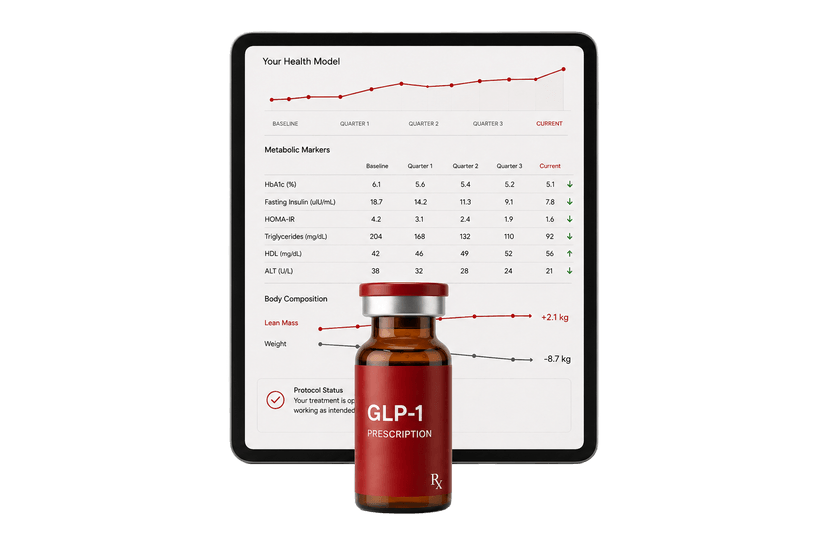
A prescription alone is not a protocol.
No baseline metabolic workup
Most GLP-1 prescriptions are written without baseline HbA1c, fasting insulin, lipids, hormones, or liver function, all markers that determine candidacy, risk, and expected response.
No structured dose titration
Standard protocols often escalate dosing too quickly, increasing side effects and dropout rates. Crimson titrates gradually, adjusting based on your individual response and tolerability.
No ongoing monitoring
A prescription followed by an annual check-in isn't metabolic care. Crimson retests at 3 months to assess response and at 6 months to confirm optimization, then continues from there.
GLP-1 is not a weight loss drug. It is a metabolic and neuroendocrine signaling molecule.
GLP-1 receptors are expressed in the heart, liver, brain, immune cells, and vascular endothelium. This receptor distribution explains why GLP-1 therapy is showing clinical benefit well beyond its original indications, and the research pipeline is among the most active in all of medicine.
20% reduction in major cardiovascular events
The SELECT trial (a 17,000-patient, multi-year randomized controlled trial) demonstrated that semaglutide reduced heart attack, stroke, and cardiovascular death by 20% in patients with existing cardiovascular disease but without diabetes. This was independent of weight loss and is among the most significant cardiovascular trial results in the last decade.
Sub-therapeutic dosing for patients who aren’t seeking weight loss.
Early data suggests metabolic and anti-inflammatory signaling effects at doses below those required for weight loss. Not an FDA-approved indication. Candidacy is determined by biomarker data, not patient preference.
Anti-inflammatory
Modulates inflammatory cytokines and hsCRP at doses below those required for weight loss.
Metabolic maintenance
May support metabolic homeostasis in patients with borderline insulin resistance or in remission.
Neuroprotective signaling
Brain GLP-1 receptor activation is under investigation for neuroinflammation, dopamine maintenance, and amyloid clearance.
Candidacy by biomarker
Determined by a full metabolic and inflammatory workup. Not offered based on patient preference alone.
Two medications. Your physician determines which fits your biology.
Semaglutide and tirzepatide are not interchangeable. Your baseline labs, metabolic profile, and clinical goals determine which is appropriate. That decision belongs to your physician, not a quiz.

GLP-1 receptor agonist
Semaglutide
The most studied GLP-1 medication in the world. Demonstrated cardiovascular event reduction, HbA1c normalization, and hepatic benefit in large-scale randomized trials.
- 20% reduction in major cardiovascular events (SELECT trial, NEJM 2023)
- HbA1c and fasting insulin improvement in pre-diabetic and diabetic patients
- Hepatic steatosis reduction in NASH populations
- Neuroprotective signaling under active investigation
Physician considerations
Often selected for patients with established cardiovascular risk or where extensive trial data is a clinical priority.
Dual GLP-1 / GIP agonist
Tirzepatide
Acts on both GLP-1 and GIP receptors, producing broader metabolic effects than GLP-1 monotherapy. Trials show superior weight reduction, lipid improvement, and insulin sensitivity.
- Superior mean weight reduction vs. semaglutide in head-to-head data
- Greater reductions in ApoB, fasting insulin, and triglycerides
- Dual incretin mechanism targets more metabolic pathways simultaneously
- Favorable tolerability profile with structured titration
Physician considerations
Often selected for patients with higher baseline metabolic burden, insulin resistance, or where lipid optimization is a primary goal.
Your physician selects the right medication after reviewing your labs and medical history.
Physician-led GLP-1 care, refined over time.
Every Crimson GLP-1 protocol follows the same evidence-based structure.
01
Join & Baseline
Membership begins with a comprehensive metabolic, hormonal, and cardiovascular lab draw included in your first month. Essential for tracking progress beyond the scale.
02
Physician Review
A licensed physician reviews your labs, confirms candidacy, and builds your personalized protocol.
03
Structured Titration
Medication is delivered monthly. Dosing escalates gradually, adjusted based on your response and tolerability.
04
Retest & Act
Labs retested at 3 and 6 months. Your physician reviews every result and acts on what it shows: dose adjustment, protocol modification, or confirmation that treatment is working as intended.
Frequently asked
questions
GLP-1 therapy is one of the most powerful tools in preventive medicine. Use it correctly.
Start with labs. Confirm candidacy. Build the right protocol.
Start My Protocol